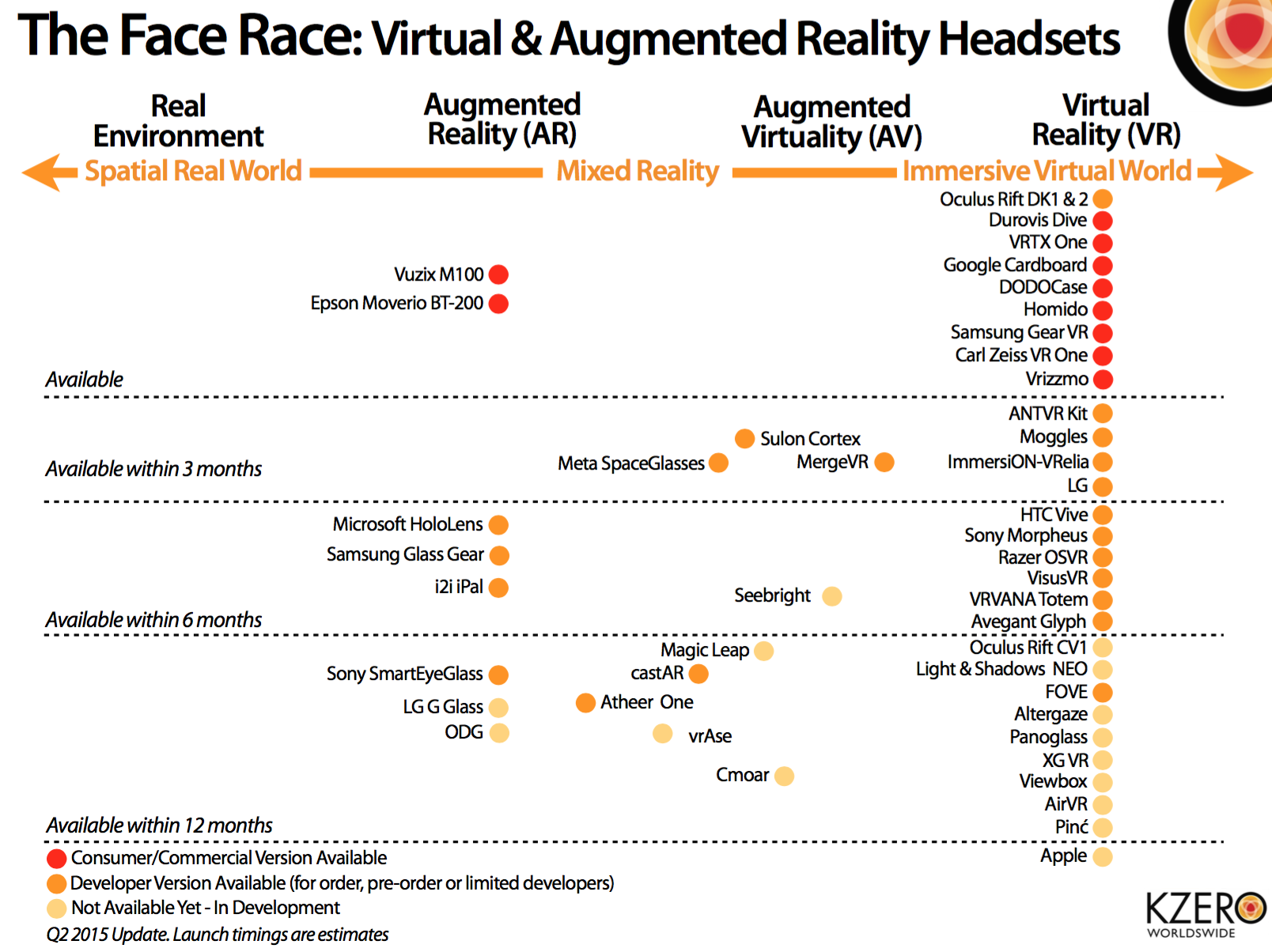
With some important announces made recently about consumer launch windows for HMDs, here’s our Q2 2015 updated Hardware Radar chart. The VR Hardware Radar plots companies developing a range of different hardware peripherals and equipment into one of the following categories: HMD – Integrated: A virtual reality head-mounted display with the screen integrated into the
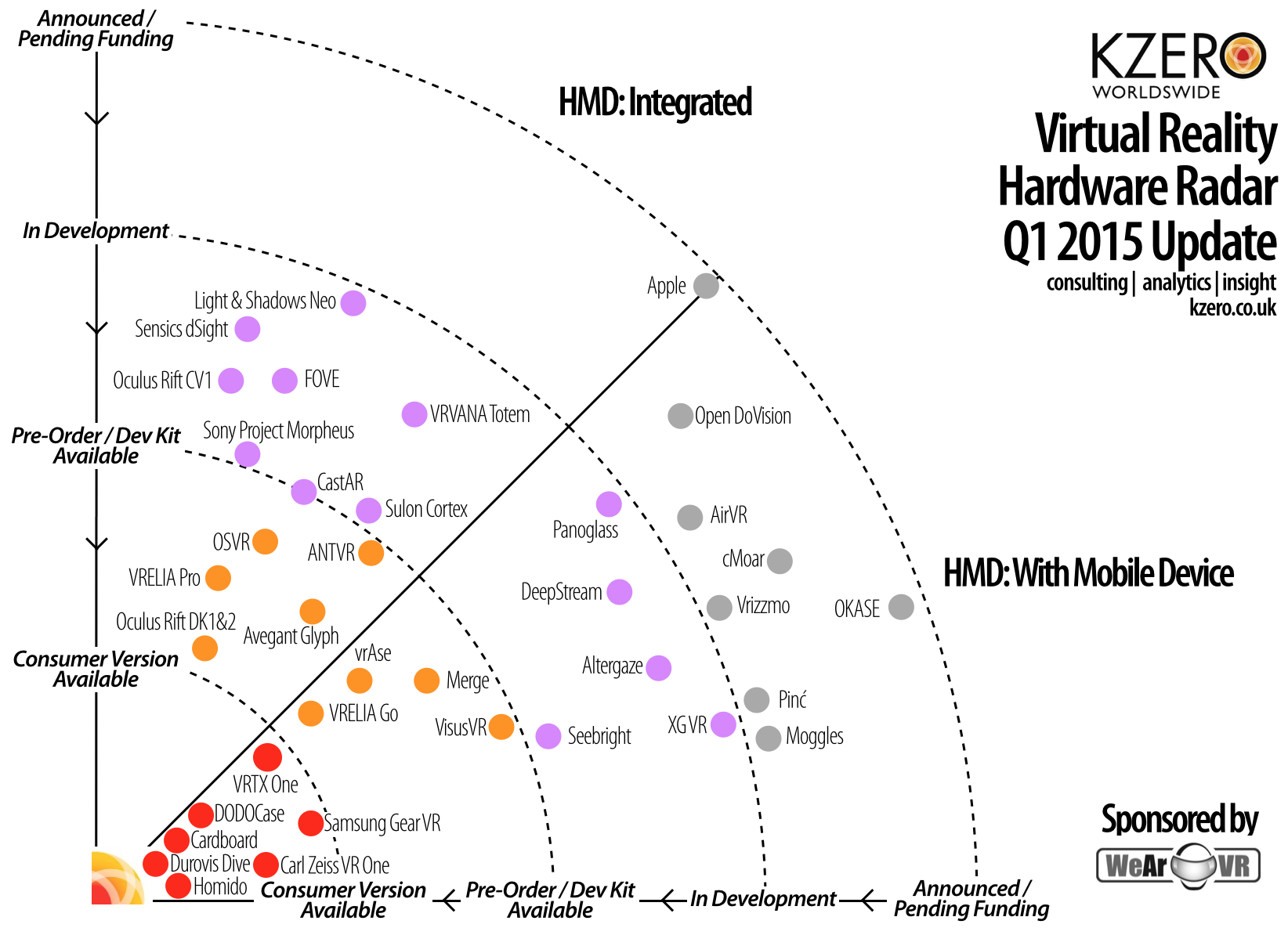
Hot off the heels of our latest update of the ‘Face Race‘, we’ve just updated the VR Hardware Radar chart for Q1 2015. The VR Hardware Radar plots companies developing a range of different hardware peripherals and equipment into one of the following categories: HMD – Integrated: A virtual reality head-mounted display with the screen
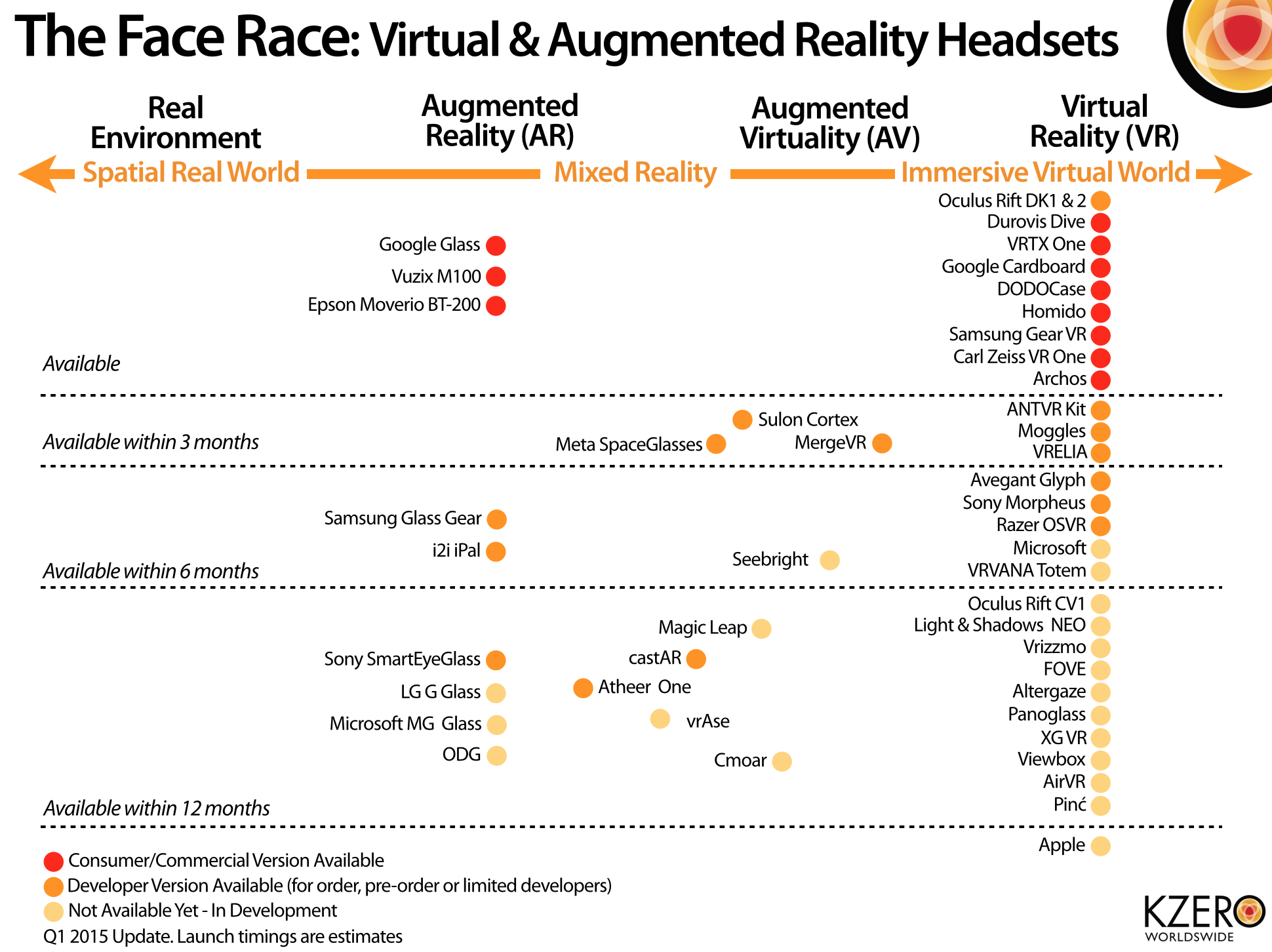
It’s CES time and the consumer virtual reality market has gone into ‘double busy’ mode. All the players, large and small, have a presence at CES this year with the big boys (Oculus, Samsung etc) presenting their kit alongside smaller start-ups keen to move into this rapidly growing space. We’ve been tracking the movers and
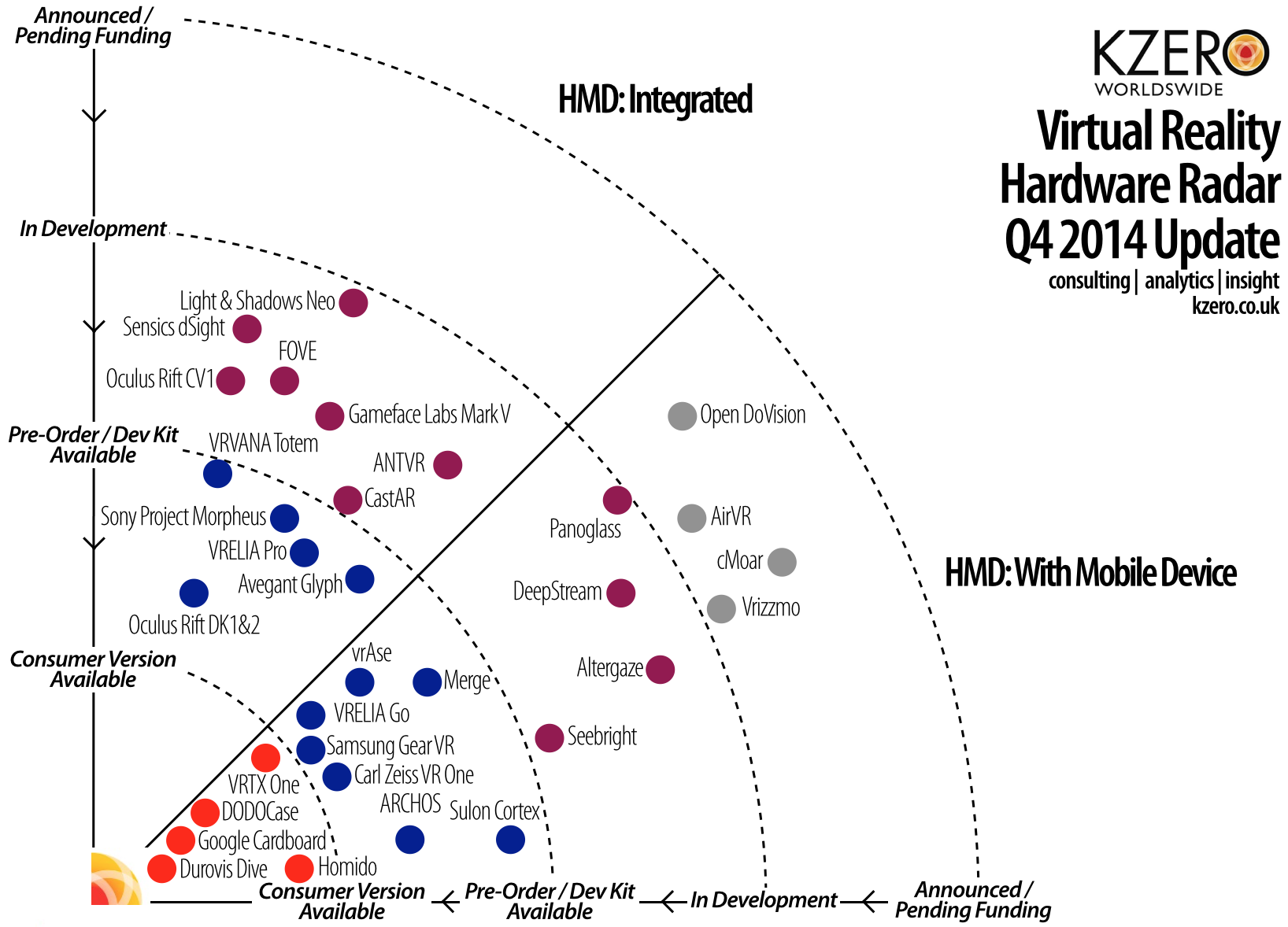
With the Virtual Reality market gathering speed at an increasing rate, we’ve decided to update our Hardware Radar on a monthly basis. The Radar plots companies developing a range of different hardware peripherals and equipment into one of the following categories: HMD – Integrated: A virtual reality head-mounted display with the screen integrated into the
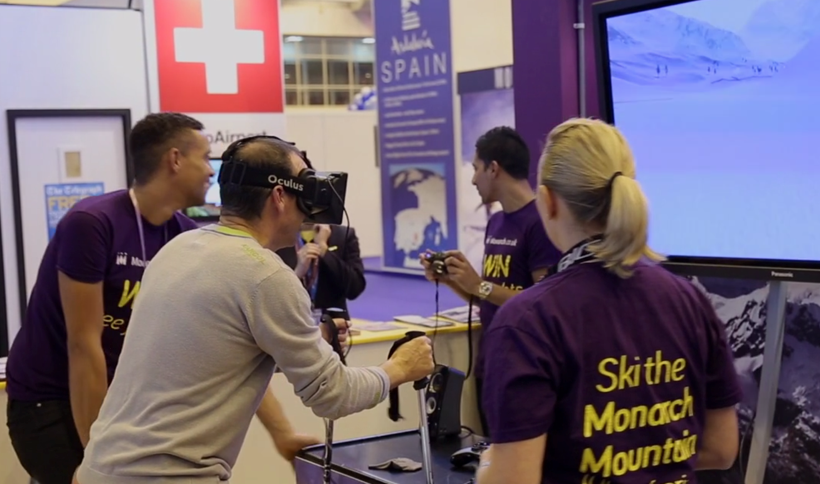
We’ve just updated our popular slidedeck showing brands in virtual reality. Shown below are 40 examples that contain a mix of official and unofficial brands in VR. From an ‘official’ perspective, brands are increasingly using VR primarily in a ‘test sense’ – these are companies keen to experiment with new marketing techniques and expect many
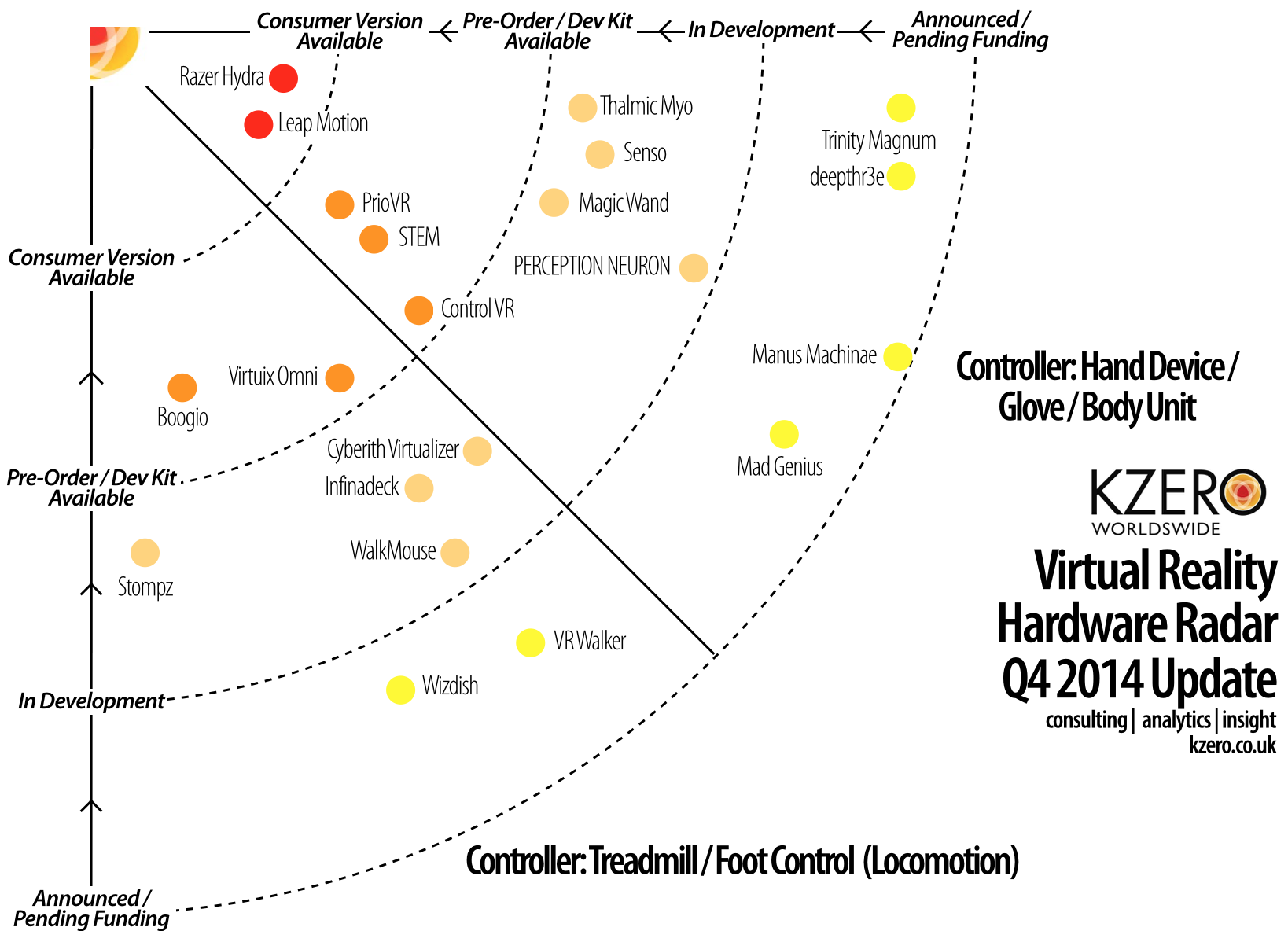
Another quarterly update, another set of new companies developing hardware for the consumer VR market – welcome to our Q4 2014 update. Let’s start with the ‘Face Race’ – i.e. companies developing HMD’s for virtual reality. Our device spectrum visualisation is shown below. So what’s going to happen this quarter? The major HMD launch is

In support of the recent article publishing our Q3 update of Virtual Reality Games by Genre, here’s the accompanying Slideshare presentation. Included in this update are Samsung Gear VR games along with Oculus Rift, Durovis Dive and Project Morpheus. The full version of the VR Software Radar chart can be ordered for free here. Virtual Reality

The KZero VR Software Radar tracks games, apps and other virtual reality experiences by genre and we’ve just updated it with Q3 2014 data. Explaining the VR Software Radar Chart The Radar visualises these games (and non-gaming apps) according to: Genre: We’ve segmented the titles into twelve different genres, from First Person Shooters and Exploration
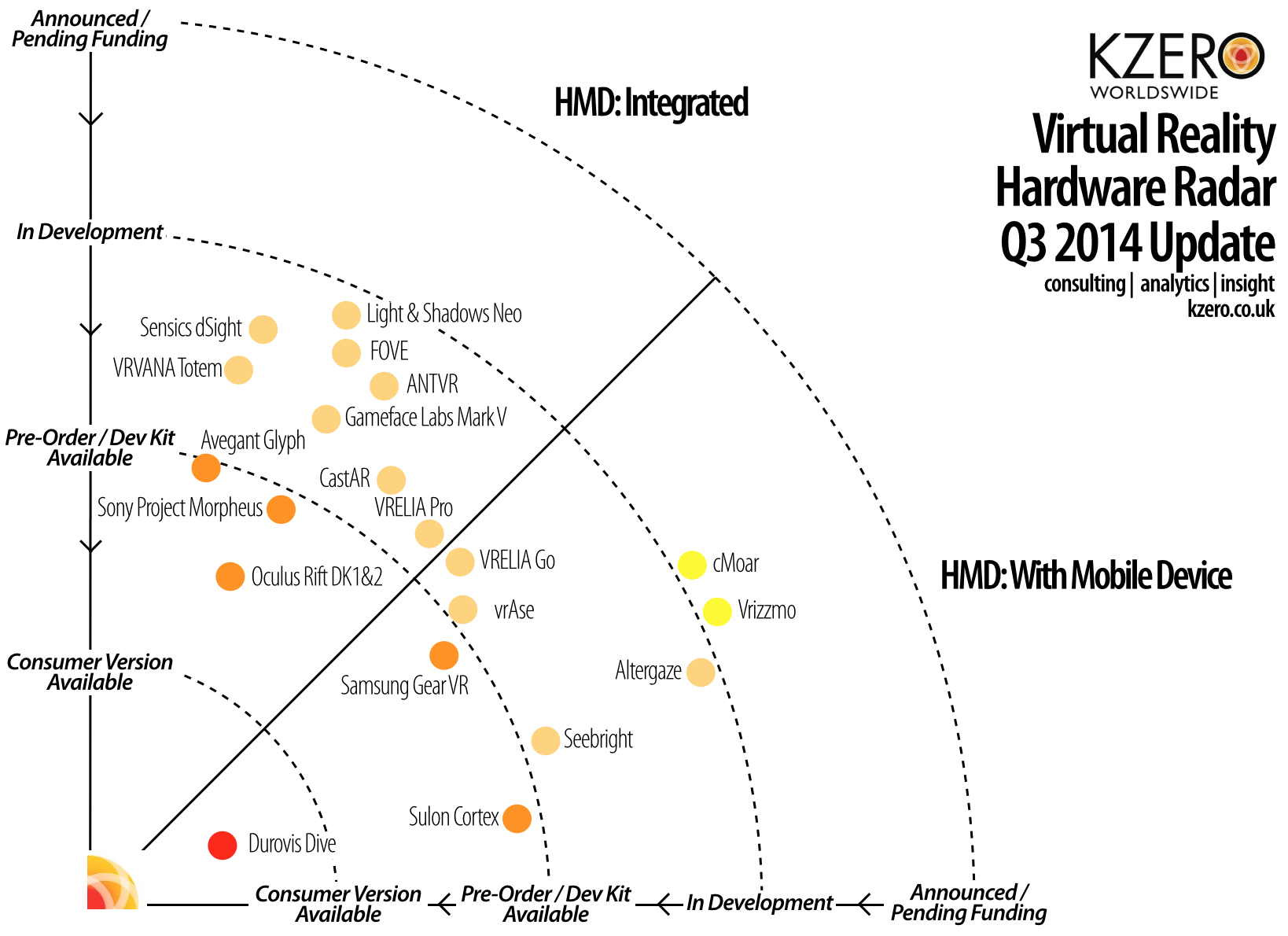
Here’s our updated Hardware Radar chart for the Consumer Virtual Reality sector, updated with Q3 data. The radar shows companies within the emerging ecosystem developing peripherals and related hardware for VR. Launch Stage We’ve assigned companies according to launch stage as they bring their products to market. Launch stages are classified as follows: Announced /
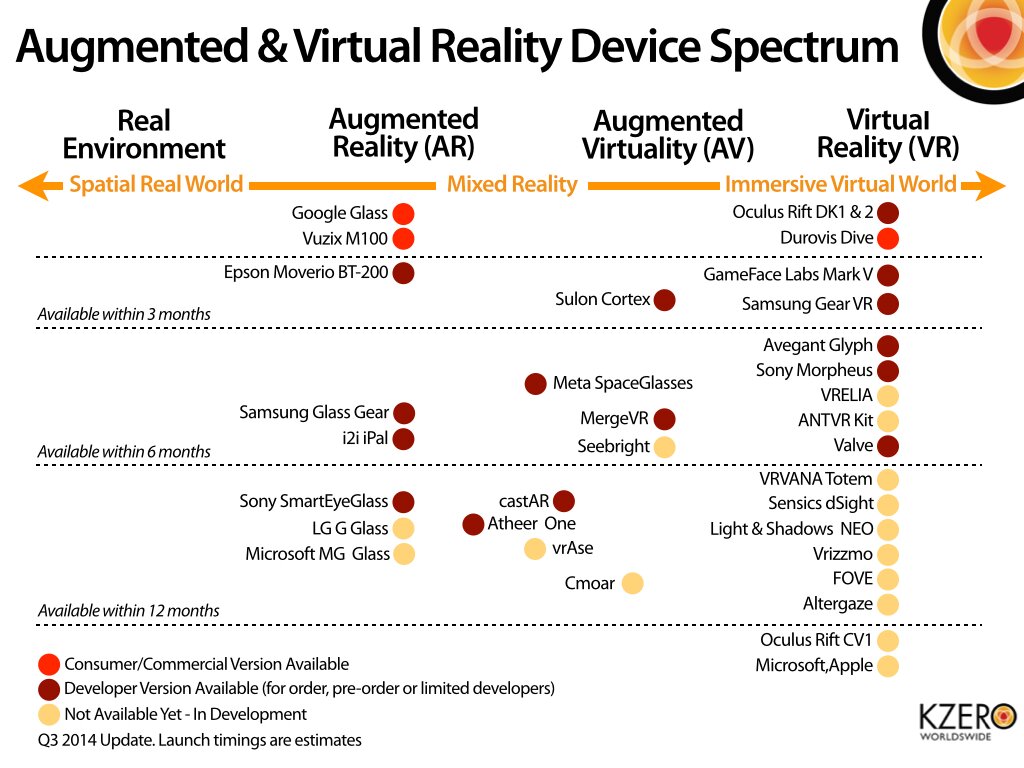
Over the coming weeks we’ll be updating all key KZero charts and reports relating to the Consumer Virtual Reality market. The first Q3 update related to our market sizing for consumer VR, which can be read here. Turning our attention to the launch timings for companies developing HMDs for virtual and augmented reality, hot of
Elevate gaming with exclusive casino rewards.