Branded Virtual Goods, Q3 2012 update

Branded Virtual Goods is a category we love at KZero and also one we helped create back in 2007. Here’s the Q3 2012 update of the much-viewed Slideshare presentation containing the virtually definitive A to Z.

Golden Triangle Slideshare presentation

Our latest report, The Golden Triangle is now available on Slideshare.

This report explains and positions the opportunities available to IP owners in the toys/games and tv/movie sectors with respect to virtual world integration. The full high-res report can be ordered here

The Golden Triangle

View more presentations from KZero Worldswide


KZero Services

KZero Reports

KZero on Facebook


New KZero report: Toys, Media and Virtual Worlds – Creating the Golden Triangle

We’ve just released our latest report called ‘Toys, Media and Virtual Worlds – Creating the Golden Triangle’.

The report, in presentation format, aims to provide professionals in the toys, games, TV and movie sectors with guidance and insight into the key opportunities and strategies available in the virtual worlds sector.

Importantly, it also recommends how to align all three elements into a cohesive community building and revenue generating platform.

Areas covered include branded virtual goods inclusion, community and awareness building, research and development, character development and many others.

Also included in the report are examples of projects deployed to date. The free report can be requested here.


KZero Services

KZero Reports

KZero on Facebook

Branded Virtual Goods – The (Virtually) Definitive List

We’ve updated our popular presentation, Branded Virtual Goods – The (Virtually) Definitive List. This presentation shows screen-shots of branded virtual goods and branded virtual experiences taken from MMOs, social games and virtual worlds. A high-res version is available by requesting it here.

Just in case you were wondering, there’s now over 150 brands!


KZero on Facebook.

KZero services:

Strategy

Business Planning

Marketing/Media

Product Development


New report, Virtual Worlds 2011+ now available

We’ve just made our latest report, Virtual Worlds 2011+ available. You can order it here.

This report identifies and explains the emerging trends in the virtual worlds sector and includes insight into:

  • Kids, Tweens and Teens
  • Platform convergence
  • Music
  • Gambling
  • Online dating
  • UGC
  • Socnet extension
  • Education
  • Virtual goods (consumer and B2B)
  • Mirror worlds
  • Mobile devices
  • Metabrands
  • Branded virtual worlds

KZero on Facebook.

KZero services:

Strategy

Business Planning

Marketing/Media

Product Development

KZero in The Guardian: Virtual worlds: is this where real life is heading?

The registered population of online communities such as Second Life and Blue Mars is greater than that of the US and Europe combined. Today’s residents of the simulated universe aren’t just socialising but doing big business.

Link to story.

KZero on Facebook.

KZero services:

Strategy

Business Planning

Marketing/Media

Product Development

China Bans Online Virtual Money Dealing for Minors

June 22 (Bloomberg)

China, the world’s biggest Internet market, said it will prohibit companies that operate platforms for online virtual-currency transactions from providing services to minors in an effort to prevent abuses.

The ban will be implemented Aug. 1, according to a Ministry of Culture statement on its website today. Online game operators that issue virtual currencies for use in their titles won’t be affected by the ban.

The Chinese government has tightened control of the Internet as the number of web users rose 29 percent last year to more than 384 million, the most of any nation. China, which prohibits pornography, gambling and content critical of the government, has blocked access to foreign websites such as that of Facebook Inc. and closed local sites. Google Inc. cited increased censorship as one reason for closing its China search site in March.

More on Business Week.

Virtual Goods: Good for Business?

An extract from a recent KZero report on B2B virtual goods (also published by the Journal of Virtual Worlds Research):

Whilst 2008 saw the emergence of the virtual worlds sector, 2009 has to be called the year of the virtual good with 2010 seeing even broader usage. With online destinations such as social networks seeing the creation of brand-new revenue steams and virtual worlds ‘giving the users want they want’, the virtual goods sector is one of the fastest growing areas of the Internet.

In its most popular form, virtual goods relate to accessories for avatars – clothing, hair and other person-related apparel. These are purchased by users to customise their appearance and are popular across all types of virtual worlds, from kids and tweens right through grown up worlds and also apply across all genres. There is an incumbent demand for users to want to  change and control how they are seen in virtual worlds.

But virtual goods don’t just include avatar appearance customisation. Online communities are learning how to monetise all aspects of the user experience, including the ability for example to buy a bespoke user name or access specific areas inside a virtual world. On the SocNet side, virtual goods are being used to great effect with social/mini-games, providing ‘tools’ to complete the game faster / level-up.

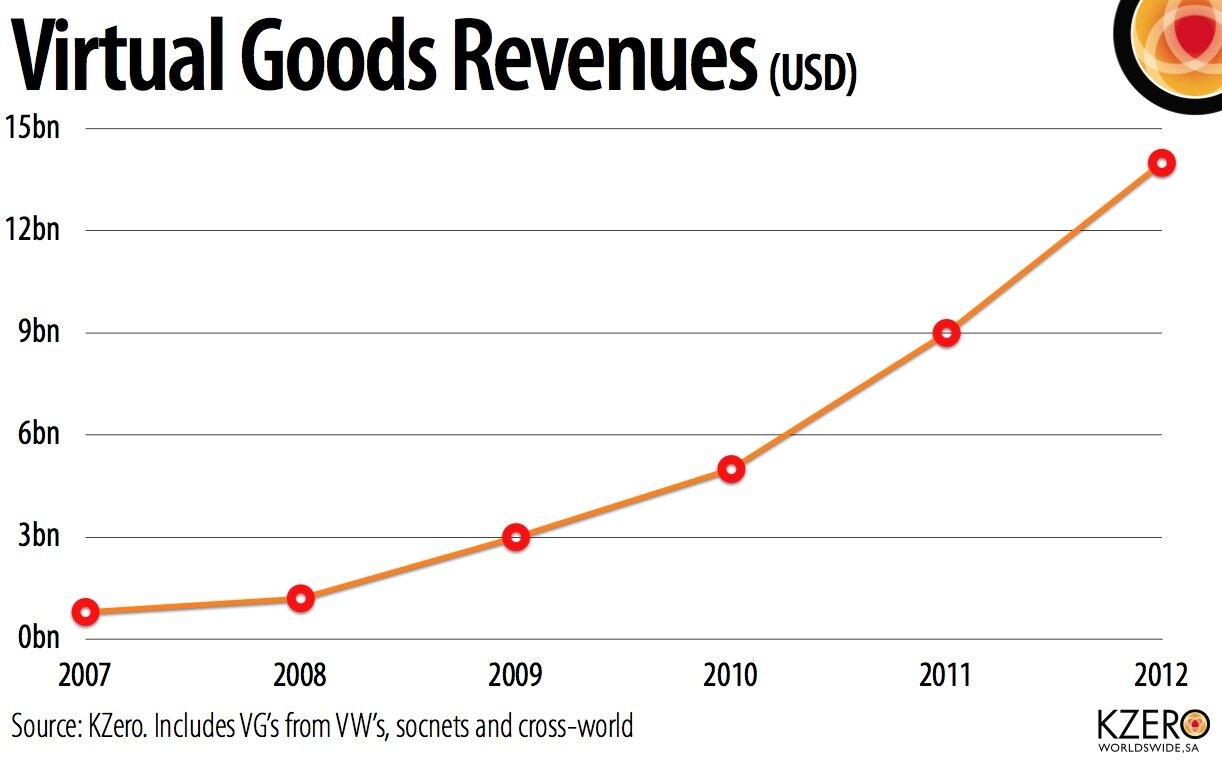
Interestingly, average revenues per paying user (ARPPU) increases in line with age, highlighting the value in older demographics. Typically ARPPUs from SocNets peak at around $5 per month, rising slightly to around $6 for virtual worlds. In terms of the overall market in total revenue terms, we estimate it to currently be worth $5bn globally (as of June 2010), rising to $14bn in 2012.

virtual goods revenues kzero

This growth rate is potentially under-estimating the future market-value when you factor in the impact of augmented reality revenues and other sources of virtual goods platforms, such as the AppStore. Continue reading “Virtual Goods: Good for Business?” »

Building the (virtual) Yellow Brick Road

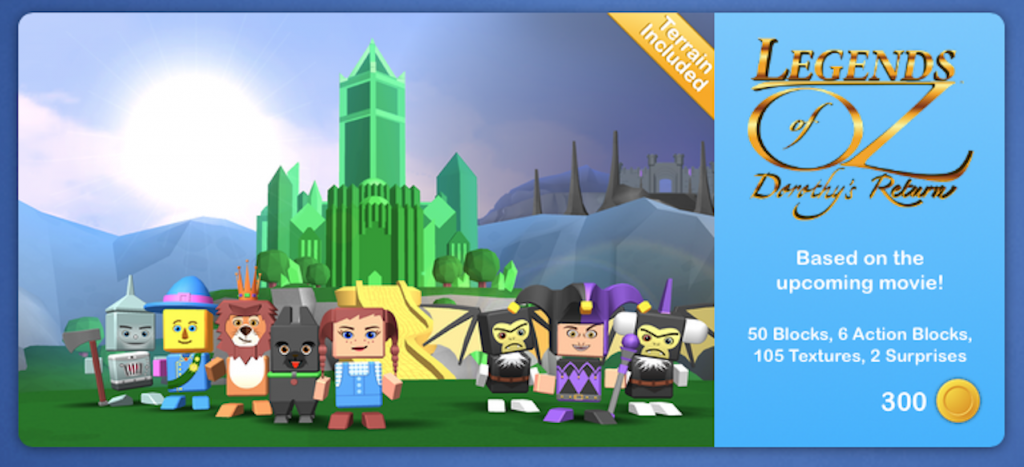
KZero client Summertime Entertainment is enjoying our full range of services in support of their upcoming animated movie Dorothy of Oz. We were appointed earlier this year to provide strategic services relating to the development of the virtual world, virtual goods and social gaming elements.

With the movie coming out early 2012, our focus has been on developing the virtual platforms to build pre-launch awareness of the movie as well as provide online destinations for fans (and monetisation of course). All online efforts are designed to bridge the Wonderful Wizard of Oz franchise to a new generation.

We’ve created the end-to-end business plan and model for the virtual world, leveraging both the Dorothy brand and the movie. This effort includes the in-world feature sets and user journey as well as game/questing mechanics, socialisation mechanics and the supporting virtual goods strategies. Now we’re working alongside Dubit to build-out the world and bring it to market Q1 of next year.

Here’s some concept artwork for the movie. Continue reading “Building the (virtual) Yellow Brick Road” »

Little World Gifts – virtual goods on the iPhone

little world gifts1Here’s an interesting concept from UK-based Little World Gifts. The company is developing a range of virtual goods available for gifting to others.

The virtual goods are all 3D and allow the recipients to interact with them. The iPhone app is being released this month (ready for Xmas) and will also have Facebook integration, tapping into the $40m virtual gifting revenue stream.

Here’s the video:

Little World Gifts – Demo from Katie Lips on Vimeo.

Via Techcrunch Europe: Continue reading “Little World Gifts – virtual goods on the iPhone” »

KT&T sector: Mixing the real and virtual worlds for new revenue streams

For a long time we’ve advocated the strategy of linking on and offline play and activities in the virtual worlds sector – a theme examined in our 2010 report.  And, with the high number of KT&T worlds in the sector coupled with the pressure to improve conversion rates and increase ARPPU’s, virtual world owners are increasingly seeking ways to drive new revenues.

One of these strategies is taking the VW brand ‘out of world’, typically with re-creations of virtual goods originally available virtually. Inversely, there’s also a growing trend to push users in-world, originating with a real world purchase. Of course, this is not a new strategy as both Webkinz and Neopets have offline brand retail experiences, but it’s definitely a growing trend in the sector.

Here’s a look at some examples:

Gaia Online: One of the pioneers of linking virtual and real world ‘products’ was Gaia, with their online store. Whereas both Neopets and Webkinz created offline retail catered for younger users, Gaia saw a merchandising opportunity to tap into their slightly older target market of mid to late teens. Users are able to purchase clothing (mainly t-shirts), accessories(hats, charms and hair accessories), and other items related to their world including plush toys. Some of the Gaia products are based on virtual goods available in-world – the first example of ‘real virtual goods?

Shidonni: “….One-of-a-Kind line of custom plush dolls. In doing so, the company has taken its virtual world’s original play experience — which animates a user’s 2D drawing, morphing it via the Shidonni software into an animated on-screen creature — one giant step further. The new line offers users the option to have their online creatures manufactured into a look-alike plush doll.” Continue reading “KT&T sector: Mixing the real and virtual worlds for new revenue streams” »

2010+ VW growth areas Part Two: Music

ftrAn extract from the KZero report, Virtual Worlds 2010:

The music category has been quick to move into virtual space already, with MTV leading the pack with its suite of micro- worlds, themed towards specific content. We anticipate this trend to continue through 2010 and beyond.

Music appears to be a binding force in virtual environments, mainly in the younger demographics and particularly tweens and teens. At this age, they already have an appreciation of music (and a growing affinity towards specific genres and artists).

We see the following areas driving growth for music in virtual worlds.

  • More IP-led platforms: By this we mean specific TV shows and music-based companies creating their own worlds, in order to support offline activities and ‘hand-hold’ audiences for longer periods.
  • Musical virtual goods: iTunes has proved the strength of micro-transactions and music. It’s no surprise that we expect songs as well as music-related virtual goods being aggressively pushed into the space, either into existing worlds or into new worlds.
  • Event simulcasting: Already a tried and tested mechanic, the concept of simulcasting – broadcasting real-time events such as concerts and music shows directly into virtual worlds, is expected to grow further into 2010. This type of promotion allows world owners (and the accompanying third-parties) to charge for access/viewing, using the content as the value. Habbo has already delved into this category and is actively involved with music – their latest foray being the European Music Awards.
  • Virtual Artists: Not so much a 2010 prediction, but certainly a little further down the road we expect a brand type category to arise – the virtual celebrity, or more specifically, the virtual artist. In this scenario, we’re seeing new virtual concepts coming to market allowing users to create their own music. On this basis, extrapolating the feature, we don’t think it will be too long before younger users actually become  ‘virtually famous’ for their musical creations. Watch this space. Continue reading “2010+ VW growth areas Part Two: Music” »

New KZero report: Luxury Brands and Virtual Goods

luxury brands coverToday we’ve released our latest report – Luxury Brands and Virtual Goods.

The report explains the options available to luxury brand marketers when considering virtual goods strategies.

Companies referenced in the report include L’Oreal Paris, Hublot, Rayban, Mercedes Benz and Armani.

Examples of marketing initiatives and campaigns explained in the report:

  • Product launches
  • Competitions
  • Metabranding
  • Customer engagement
  • Brand extension
  • Advertising

The report can be ordered here.

KZero services:

Strategy

Business Planning

Marketing/Media

Product Development

2010+ VW growth areas Part One: Branded Worlds

Our latest report, Virtual Worlds 2010+ explains the key growth areas emerging in the sector over the next three years. This is a series of posts taking each area in turn and breaking out the analysis.

We think one of the major contributors to growth in the KT&T category will be branded worlds – virtual worlds created by real world companies in the toys, games and media spaces.

Picture 9We’ve already seen some indication of the power of branded worlds, namely with Barbie Girls, Webkinz and Buildabearville (shown right in a segment from the Radar).

The MTV suite of worlds are also worthy of note, albeit slightly less successful (in terms of comparative registered accounts), perhaps due to targeting a slightly older age group.

All three of these branded worlds amassed multi-million registered account user bases in a relatively short period of time – something pure-play virtual woods typically struggle with.

Here are the reasons why branded worlds are set to be major growth areas in 2010+:

1. Brand awareness

The importance of The Brand is often over-looked by new VW companies. Sure, having a technically sound platform and product is one thing and of course, viral marketing is great (as a theory) but potential users need to know about the world. Branded worlds have a huge advantage over pure-plays because they have incumbent levels of real-world brand awareness – they have customers that already have a relationship with the brand.

We’ve recently completed a consulting project for a global games publisher on one of their tween brands, providing guidance and strategy on the in-world user experience/journey, financial model, marketing/acquisition and monetisation strategies. What blew us away right at the start was the incredibly high level of brand awareness in several key territories – an ideal start for a virtual world.

Furthermore, creating the virtual world was almost a ‘no-brainer’ strategy as it’s simply an evolution and extension of their existing brand.

Continue reading “2010+ VW growth areas Part One: Branded Worlds” »

Virtual worlds and goods Twitter lists

We’ve created some Twitter lists to keep you updated on latest developments in the virtual worlds and good markets. As follows:

.

Virtual Worlds Companies: This list includes official virtual world Twitter streams (Twinity, SmallWorlds, Habbo etc) as well as supply chain companies (moderation, payments etc):

.

Virtual Worlds Research: Individuals and companies commenting on the virtual worlds market:

.

Virtual Goods Companies

.

Virtual Goods Research

.

KZero services:

Strategy

Business Planning

Marketing/Media

Product Development

Will luxury brands drive the growth of virtual goods?

The purchase of virtual goods in virtual worlds is increasing and most worlds now incorporate this element into their propositions. But which categories or types of products will be most successful from revenue-generation and demand perspectives?

Picture 1Backing up on this point slightly, let’s talk about the area of revenue sharing for brands in virtual worlds. By this, I mean real world brands earning out of virtual transactions.

This is a concept I think we’ll see a lot more of in the virtual worlds sector. And it makes sense. If a company brings their brand into a third-party world and part of the offering is to allow residents/users to purchase virtual branded items, then surely the brand is entitled to a share of revenue. I think we’re about six months away from seeing this type of arrangement take hold.

Back to luxury brands.

Continue reading “Will luxury brands drive the growth of virtual goods?” »

New KZero report: Virtual Worlds 2010+

virtual worlds 2010 coverWe’ve been rubbing our crystal balls again, thinking about the growth areas for the virtual worlds sector. And, we’re delighted to say our findings are now contained within the latest KZero report – Virtual Worlds 2010+.

The report can be requested here and is ideal for companies considering entrance into the virtual worlds market as well as Investors seeking insight into the key growth areas and emerging business models. An overview presentation is here.

The report covers the following areas:

Continue reading “New KZero report: Virtual Worlds 2010+” »

Growth forecasts for the Virtual Worlds sector

We’re excited about the growth in virtual worlds, very excited in fact. As we release our forecasts for the sector, perhaps it’s time to have a quick look back over a frantic few years…

In an unfortunate way, the global credit crunch got in the way a little (the understatement of the year – not just for VWs of course). Late 2006 was the start of things. Sure, worlds like Habbo, There and Second Life were around pre-2006, but it wasn’t until brands started moving into SL that media awareness grew and, of course, users began to notice the metaverse.

Without a doubt, 2007 was the year of Second Life, with over 100 brands setting up islands. This created major attention, good and bad. And nevertheless, while No Brand is and Island, this marketing surge took virtual worlds mainstream. Linden Lab has a lot to be thanked for – Virtual Worlds were on the map in 2007. Additionally, we can’t forget about the Disney acquisition of Club Penguin – the catalyst for Kids, Tweens and Teens (KT&T) related business plans to pop up at an astonishing rate, ‘Chasing the Penguin’ as we call it.

2008? This was growth across many segments. Mirror Worlds came into play, more KT&T worlds were launched and suddenly the sector was rocking. The longer established worlds continued to grow their multi-million registered user bases and the new worlds started to battle it out.

Then we moved into 2009. Everything was looking rosy until the economy stepped in and slowed the launch of new worlds due to lack or drop-off in funding. Interestingly, ARPPU’s didn’t really take a hit, as users continued to spend money in-world. However, generally the growth and momentum seen in the sector upto the end of 2008 was impacted. But, as we start to move towards 2010, what does the future have in store? One thing’s a dead cert – we’ll be producing lots more charts – you can see them all here.

Lot’s of brand-new concepts in the VW space is one area that’s really exciting. More KT&T worlds? Absolutely – we think this age segment will continue to drive growth. And we’re optimistic about older worlds catered towards adults (in an ‘adult’ sense as well as propositions aimed at more mature audiences), with learning and education plus gambling being key genres to watch.

Here’s our forecast for the growth in the number of virtual worlds. By the end of this year we’ll be at the 150 mark for total worlds. We forecast this number to double by the end of 2010.

A rapid increase, driven largely by media sector companies creating IP-driven platforms for the toys, TV programmes, films and other properties. Just as almost every KT&T property has a website, we expect them to have a VW or at least presence in virtual worlds – along the ‘Theme-Park’ approach discussed in the past.

We expect growth past 2010 onwards to come from multiple areas. Education and older age ranges will supplement KT&T growth. Also socnet extension from ‘pages to places‘ is a natural movement. Combine all of this and we get to our 2012 forecast of 900 virtual worlds.

Continue reading “Growth forecasts for the Virtual Worlds sector” »

Socnets are an increasing source of virtual good spending

eMarketer’s article “Virtual Goods Mean Real Dollars” emphasizes the fact that the creation of virtual goods is one of the most promising ways for marketers to enter the virtual world space and that social networking sites are a growing source of virtual spending platforms.

With an increasing number of virtual worlds and social networking sites offering branded virtual goods to their members, the increase of 134% in revenue totals from last year is not a surprise. This statistic is predicted by Piper Jaffray’s “Pay to Play” report. The report continues to explain that most of the branded virtual goods revenue came from virtual worlds last year, and the authors predict “the trend is shifting to more virtual goods revenue coming from social networks.” This trend is something the industry experienced first-hand with Britney Spears launching her branded virtual goods in Facebook’s gift shop just yesterday. Read more here.

Debra Aho Williamson, eMarketer’s senior analyst, said “nothing says engagement like a flock of avatars crowding a virtual store and showing off their haul in their virtual home.” This is true and the fact that virtual good purchases are becoming more of a norm, is proving to marketers and retailers that virtual goods are desired in the real world. Marketers must realize that there is a need to alter their virtual goods constantly so they can stay on top of the consumer demand.

Here’s our forecast for virtual goods.

A clever way to raise money… Britney does it again

Britney Spears has thought about it and realized that virtual gifting may be the answer to raising money in this crisis and that virtual goods are “in.” The pop singer is selling branded virtual goods on Facebook. This is a first for the social networking site reporting that it marks a first time a global recording artist is offering “virtual gifts specific to their likeness.”

Computer iconographer, Susan Kare, collaborated with Spears to design the star’s themed gifts. The gifts are all based around “memorable Britney moments” and include items such as her infamous schoolgirl outfit, a Britney birthday cake, and icons of the singer. Each gift costs 20 credits in the Facebook Gift Shop, an equivalent of $2. With close to 2 million Facebook friends, Britney Spears may have found the solution to raise an easy million.

Intel Labs and Fashion Research Institute Collaborate

Intel Labs and the Fashion Research Institute (FRI) have entered into a new research collaboration that will help fashion designers make more efficient usage of virtual worlds.

The Fashion Research Institute is providing visual content to aid Intel’s 3D Internet research, while Intel supplies the technology. Shenlei Winker, CEO of FRI, explains in his blog that “this collaboration is currently scheduled to run for a year, during which time FRI will provide increasingly complex, highly detailed, large scale (beautiful) designs which will be showcased in Science Sim with hosting and hardware provided by Intel Corporation.”

FRI is interested in virtual worlds because the fashion industry, which uses soft consumer goods, does not use 3D computer aided design tools used in the durable goods industry. Designing clothing and fashion accessories, real-life 3D objects, are more accurately displayed with 3D sketches rather than 2D sketches. The advantage of using a 3D environment, such as a virtual world, in design concepts will reduce errors when replicating, manufacturing, and producing the design.

Furthermore, fashion designers and manufacturers can greatly reduce environmental waste as well as time by designing and re-creating prototypes in virtual worlds. One example is that designs can be reviewed simultaneously by designers and manufactures on different sides of the globe.

Virtual goods purchased by 12% of Americans

A new study released yesterday by Frank N. Magid Associates and PlaySpan shows that more than one in 10 Americans or roughly 12 percent have bought a virtual item at some point in the last 12 months. The virtual goods and currency market is estimated to reach $1.8 billion this year (US) and demographic research offers insights into who is buying what and where.
Virtual world usage is significant as nearly half of the respondents who report being active MMO participants are also virtual item consumers.
More info can be found in the article by Wagner James Au here.

Trend watch: Virtual world search terms

We’ve taken a look at this before – search terms landing on the K Zero website. Here’s some interesting searches from Jan….

opposite of interoperability

adult virtual worlds

second life demographics

virtual worlds for 11 year olds Continue reading “Trend watch: Virtual world search terms” »

Puma in Football Superstars: Virtual store and goods

Football Superstars is now live and doing rather well with over 250k registered users already (more about this over on VWN’s). Puma is one of the lead brands in-world at the moment (with Reebok) and is deploying a virtual goods strategy. Here’s some imagery from the campaign.

Continue reading “Puma in Football Superstars: Virtual store and goods” »

Are Mirror Worlds the answer for greater VW adoption?

We all know that virtual worlds catering to KT&T segments are hot property right now – lot’s of worlds already launched and plenty in development.

.

That’s all well and good but I’ve been thinking a lot about us grown-ups and the opportunities and factors influencing greater take-up in the adults space. To be realistic, there’s not actually a whole load of choice available for adults wishing to explore virtual worlds at present and to a high degree Second Life has no competitors (yet).

.

.

And it’s interesting because all these worlds for kids etc have been (and are) created by adults. We’ve just completed an initial business planning and strategic project for a new kids/tween VW where the creative drive is coming directly from some children – we’re using their vision and ideas. But this made me realise just how under-served older people are in the virtual worlds space.

.

But, putting the actual platforms aside for a moment, it’s worth thinking about what sorts of activities or experiences would actually stimulate greater penetration and make in-roads from the early adopters into the early majority. Early adopters typically account for 13.5% of the general population whilst the early majority are a much larger group, representing 34% of the GP – sizable and attractive.?

.

As shown in the graph right, it’s the adoption gap which I’m talking about here – and specifically how mirror worlds can potentially bridge the gap.

.

Continue reading “Are Mirror Worlds the answer for greater VW adoption?” »

Goodbye IMV2 aka Google Lively

So, Google Lively is closing down at the end of the year.

Does it matter?

Not really. Although many people spoke about ‘validation’ in the industry by Google entering the VW space, there was no fundamental strategy in place. And validation isn’t really important because it’s the kids using the other popular worlds who are driving adoption today and more importantly taking us to new frontiers in the future.

People spoke about the brandopportunitiesin Lively. These didn’t materialise. After all, it’s a short list of brands that would want their rooms listed next to sex clubs. Plus, branded rooms is a throw-back to the marketing disasters we saw in Second Life in 2007.

They didn’t really understand their target market for Lively either. Who were they targeting? Did they even know?

Continue reading “Goodbye IMV2 aka Google Lively” »

Growth areas in 2009 for virtual worlds: 15 to 25

The 15 to 25 year old segment is nowhere near as hectic as the 5 to 15 space in terms of virtual worlds but nevertheless contains companies with impressive user numbers – IMVU and Gaia being great examples. This segment also has some high value characteristics, such as:

.

  • Higher and more direct access to monetisation (wallets/purses)
  • Prevalence/usage of existing social networking apps
  • Larger and more cosmopolitan social networks
  • Higher mobile device penetration

.

So where are the growth areas in this space?

.

Fashion / Lifestyle

.

Avatar customisatiom appears to be popular across all age segments of virtual worlds. View one: just as in the real world, people want to express their personalities via their appearance. View two: if a virtual world gives users the facility to change their apperance then they will. Either way, it’s popular.

.

Brands in the fashion, clothing and accessory sectors have major opportunties in virtual worlds. We’ve seen this already in Second Life, Stardoll and There. And there’s two angles here:

.

a. Using VW’s on an integrated basis to promote real world clothing lines

b. Creation of metabrands to leverage brand equity

.

Expect more companies in this category to move in. Here’s a post about luxury brands and virtual goods.

Continue reading “Growth areas in 2009 for virtual worlds: 15 to 25” »

The FT says: Virtual goods networks could rival ads

Nice little article from the FT about how virtual goods revenues could offset online advertising. My view is that it isn’t about offsettingrevenuesin turbulent times – virtual goods will in time be a dominant income stream for brands and companies regardless of the economic situation. A view shared I’m sure by Viximo, referenced in the article.

Related: The rise of the Metabrands

Extract:

If online advertising is under pressure, perhaps branding virtual goods can help make up a greater proportion of revenues….


Virtual goods are seen as having more impact than ads on Millennials – the 13-26 age group who largely populate social networking sites and will respond more to receiving Godiva chocolates or Nike Air shoes, even if they are not the real thing.

Virtual Pursuits – Who’s on the Radar?

It’s been a week of talking about the future of virtual worlds with VC’s, investors and research companies. The over-penetrated sectors, the under-served niches and where the smart money should be placed from an investment perspective. It’s also been a week of looking at a lot of business plans for potential new worlds with the founders not always realising there’s already competition in the space they’re looking to enter.

.

On that note, I thought it would be be interesting and useful to segment the Universe graph by sector and genre to shed some light on the questions above.

.

So, I’m dieingto call this graph ‘The Wedgie’, but I’ll settle on the ‘Radar’ (or maybe even Vadar). Here we go:

There’s a lot going on – we know this, so to make this a little easier to assimilate, it’s broken out a little below (and a high-res PDF version can be requested here).

.

Socialising/chat, casual gaming and misc are shown below with bands reflecting age groups. There’s about 25 worlds off the radar (i.e. in stealth mode) not shown here. Blue dots refer to worlds in development or closed beta. Red are live or open beta.

Mirror worlds, roleplay/fantasy/quests and toys/real world game worlds are shown below. The toys and real world games sector is a hot area right now, set for continued growth in the next 12 months. Mirror worlds are one of the few categories tailored towards older users.

. Continue reading “Virtual Pursuits – Who’s on the Radar?” »

Virtual dress sells for $1,700 (that’s real money)

Last week I wrote about how luxury brands may hold the key to stimulating and driving the virtual goods (clothing) sector [readWill luxury brands drive the growth of virtual goods?].

New World Notes reports today that as part of the American Cancer Society’s Relay for Life campaign in Second Life, a virtual evening gown made by Eshi Otawara was bought for L$460,000 – approx. $1,700. Impressive – exciting – strange? – expect a whole lot more of this.

Two points:

1. People are starting to pay larger sums for virtual goods

2. Non-profits can successfully leverage virtual worlds for fund-raising

K Zero services

For brands

For virtual world owners

For investors and VC’s

Evaluating virtual world business models. Part One

In terms of growth, the virtual worlds sector is exploding with dozens of new worlds across many different fields appearing on a regular basis.

.

With this growth comes new types of business models, some tested, some untested. Some rely on ‘traditional’ web-based revenue streams whilst others are experimenting with brand new sources of income.

.

What exactly what are the options for companies developing virtual worlds and associated business models?

.

Premium subscription

.

Probably the most popular business model at present and used by worlds such as Club Penguin and Second Life (for land purchase). Many KT&T worlds in development are relying on this business model of offering a basic service to all members and an enhanced version via premium upgrade. Some worlds also complement premium subs with a micro-transactional element.

.

Pro’s

.

  1. An understood pricing model for consumers and operators
  2. Provides higher than average (per transaction) revenue for the operator
  3. Can create recurring revenues if contractually structured
  4. Gives the consumer (the user) instant access to ‘upgrade’ areas or features
  5. Can be beneficial for real-world brands with high brand equity

.

Con’s

.

  1. Can create a barrier to entry from a free to premium conversion perspective
  2. Potentially(strategically)exposes world owner to free to play competitors relying on other business models
  3. Requires investment in brand building and/or relies on a ‘big’ idea, not a me-too

.

Free-to-play

.

These are virtual worlds offering a completely free service such as Dizzywood (for now).

.

Pro’s

.

  1. Lowest barrier to entry
  2. Universal access and engagement
  3. Unique differentiator

.

Con’s

.

  1. Ultimately requires supplementary revenues such as banner ads
  2. Expensive to maintain
  3. Requirescomparativelyhigher numbers of users to become attractive to investment

Continue reading “Evaluating virtual world business models. Part One” »

Beg, Borrow or Steal? What can brands do in virtual worlds?

To the casual observer, during 2007, there was only one option for brands wanting to move into virtual worlds – Second Life. It still amazes me today how many totally unsuitable companies (based on product/service offering and target markets) actually set-up there.

To the more informed individual however, of course there’s other options for marketers – there’s a lot of different worlds out there….and even more to follow. And encouragingly several brands have virtual footprints in these spaces.

What I’m getting at here is the evolving environment and therefore decisions open to brands when developing a strategy for virtual world marketing (and let’s just hope they do actually have a strategy). Maybe one way to look at the strategic options is using the Beg, Borrow or Steal analogy.

Beg

Second Life is a generalist virtual world, catering to everyone and no-one. It allows endless capabilities for creativity or alternatively just an interestingly chaotic mash-up. But for brands, generalist worlds such as SL can be harsh places to do ‘stuff’. You just need to take a look at the traffic levels for many of the global brand venues (even right after the fanfare launches) to realise how little impact they actually had in-world. Not too many people cared.

However, the majority of SL marketing campaigns that actually did have an effect in-world were the ones that actively went looking for residents. They didn’t sit back in the comfort of their branded island and wait for the floodgates to open (if only). Instead a more direct approach meant the brands came down from their real-world pedestals and got their hands dirty with the locals.

The communication approach that this instance is one of kindly asking for the attention of residents and appreciating/realising that the main reason for these residents to be in-world is definitely not to look at real world brands.

Does this approach world for all brands? Definitely not. But for some, especially in the clothing, fashion, appearance and accessory categories, there’s real demand for real-world brands.

Borrow

Some companies, mainly American, have taken a different approach for the virtual antics and instead have taken their brands into more controlled environments – they’ve borrowed the land and the attention of the members for tactically short bursts of activity.

Is Borrowing good? For some brands for sure. The degree of brand control in this type of environment is much higher than in a generalist world, basically because the virtual world owner is getting paid by the brand to create and manage the marketing effort and typically these worlds don’t allow too much UGC in-world.

Example of these types of platforms…..vSide, Stardoll, There, Kaneva, Whyville and a few more.

Typical user profiles for the users in these worlds……teens and young adults.

Are there downsides to Borrowing?

One issue is the constraints of the virtual world where the campaign takes place. Different worlds have different design values, styles, functionality and cultures. And, although the target market of the world may be a great fit for the brand, limitations on what’s actually possible (mainly technical reasons) may dillute the overall concept. All the more reason for virtual world operators relying on brand marketing revenue streams to pay closer attention to the real-world activities and drivers of their potential clients.

A lower amount of marketing data available is another potential downside for brands considering Borrowing. Different worlds have different levels of user and interaction data available pre, during and post campaign. Perhaps another area for virtual world operators to focus on.

Steal

The most recent development in the virtual worlds space from a brand perspective is the concept of these companies creating their own worlds. Doing this means they’re stealing attention (in the form of registered accounts and time) away from other virtual worlds.

Of the three options outlined in this post, stealing is the most expensive and time-consuming option. In fact, a real-world brand creating their own virtual world has to take a dedicated business-unit approach to the operation due to the sheer volume and wide array of elements required to launch a world.

But does this investment pay-off? We have early examples of successful brand-worlds, such as Barbie Girls and vMTV to look at. More interestingly though here is the high number of worlds in development from brands. Many companies are brave enough to put their money where their mouths are and go for it. Why? Because the benefits in theory are clear…

Total brand control in a world built specifically for that brand can only be a good thing. ‘Owning’ the member is another good reason as is the opportunity to create dedicated virtual revenue streams from activities in-world.

Understanding the wants and needs from the target market in a virtual space is the key for success with this option.

Are there any other options?

Oh yes. There’s some really unique new business models coming downstream built in some cases specifically for virtual world brand marketing. Some relate to virtual goods and services, some to cross-world experiences and even some taking a more augmented reality approach. So, great news for brands – they have a choice. What does this mean for the various types of virtual world operators and propositions? It means competition. And we all know who benefits from competition.

K Zero services

For brands

For virtual world owners

For investors and VC’s

Agencies need to get ‘Tech Cred’

Adweek is carrying a story from the 4A’s Digital Conference. Mark Kvamme from Sequoia Capital comments on how he views the convergence of advertising and technology in the context of agencies.

“You have to have world-class creative but you have to have world-class tech folks who can translate that into conversations,” said Kvamme, currently a venture capitalist at Sequoia Capital, one of Silicon Valley’s leading VC firms.
Google, which Sequoia backed, found that its market share would change based on whether its search results came back a tenth of a second faster, proving that technology is far more than just an add-on as media becomes increasingly digital, Kvamme said. Continue reading “Agencies need to get ‘Tech Cred’” »

Virtual goods and Stardoll overview from Google Zeitgeist08

The Google Zeitgeist08 event took place last week. Here’s an interesting segment from Mattias Miksche, CEO of Stardoll (a K Zero client) giving an overview of virtual goods, UGC and the Stardoll business model.

K Zero services

For brands

For virtual world owners

For investors and VC’s